Habits That Support Responsible Debt Management: Transform Your Finances
Debt is often viewed as a financial burden, but when approached with a strategic mindset, it can be a bridge to significant life milestones. Whether it is a student loan, a mortgage, or a professional credit line, the difference between a helpful tool and a stressful weight lies in your daily behavior.
Cultivating Habits That Support Responsible Debt Management is essential for anyone looking to maintain a healthy credit profile while ensuring their long-term financial stability remains intact.
Managing debt effectively is not just about making payments; it is about creating a system of awareness and discipline that prevents interest from spiraling out of control. By adopting a proactive stance, you can navigate your obligations with confidence and clarity.
This guide explores the fundamental routines that empower you to stay ahead of your creditors and turn your liabilities into a manageable part of a successful financial life. Let’s look at the practical behaviors you can implement starting today.
1. Establishing a Mandatory “Contract Review” Ritual
Responsible management begins with deep knowledge. One of the most critical Habits That Support Responsible Debt Management is the habit of reviewing your loan contracts periodically.
It is easy to forget the specific terms, such as interest compounding frequency, late fee structures, or the exact date a variable rate might adjust. Set a recurring appointment every six months to read through your statements and original agreements.
This habit ensures you are never blindsided by “fine print” surprises. Knowing exactly how much of each payment goes toward interest versus principal allows you to make more informed decisions about extra payments.
When you understand the mechanics of your debt, you stop seeing it as a mysterious force and start seeing it as a mathematical puzzle that can be solved with the right strategy. Total transparency is the first step toward total control.
2. Prioritizing the “Principal-First” Mindset
Most borrowers simply pay the minimum amount requested by the bank. However, those who manage debt responsibly develop the habit of looking for opportunities to pay down the principal balance directly.
Even small, consistent additions to your monthly payment—directed specifically toward the principal—can shave years off the life of a loan and save you thousands in interest costs over time.
Whenever you receive unexpected income, such as a tax refund or a work bonus, make it a habit to allocate a percentage toward your highest-interest debt. This behavior significantly reduces the base amount upon which interest is calculated, creating a powerful compounding effect in your favor.
It is a proactive way to “buy back” your future income from the lender. See the table below for the impact of principal-focused habits:
| Strategy | Payment Type | Long-Term Impact |
|---|---|---|
| Minimum Payment | Interest-heavy | Standard loan duration; maximum interest paid. |
| Rounding Up | Principal-focused | Shortens loan life; moderate interest savings. |
| Windfall Allocation | Lump-sum principal | Significant acceleration of debt freedom. |
3. Automating Punctuality and Monitoring
In the world of credit, timing is everything. A single late payment can trigger a cascade of negative effects, from increased interest rates to a damaged credit score. The habit of automation is your best defense against human error. Set up automatic transfers for at least the minimum amount due to ensure you never miss a deadline, even during busy periods or travel.
However, automation does not mean “set it and forget it.” Pair this with the habit of a weekly “digital check-in” where you verify that the transfers occurred correctly and review your current balances.
This dual approach provides the security of automation with the oversight of manual management. It keeps your debt obligations at the front of your mind, preventing the “out of sight, out of mind” trap that often leads to financial drift.
4. Implementing a “Debt-to-Income” Audit
Responsible debt management requires a constant eye on your overall leverage. Habitually calculating your debt-to-income (DTI) ratio every quarter helps you understand your true financial flexibility. If your debt payments are consuming an increasing percentage of your take-home pay, it is a clear signal to pause any new borrowing and intensify your repayment efforts.
Maintaining a healthy DTI ratio is a hallmark of financial maturity. It ensures that you always have enough “breathing room” in your budget to handle emergencies without resorting to high-interest credit cards.
By monitoring this ratio, you act as your own Chief Financial Officer, making high-level decisions based on hard data rather than gut feelings. This macro-view is essential for long-term wealth building.
5. Avoiding the “Convenience Credit” Trap
One of the most dangerous habits for those with existing debt is using credit for daily consumables or “convenience” purchases. To manage debt responsibly, develop the habit of using credit only for planned, high-value investments that have been vetted against your budget.
For daily expenses like groceries or gas, stick to debit or cash to ensure you aren’t adding to your total debt load every time you visit the store.
This boundary prevents “lifestyle creep” from hiding inside your debt balances. When you separate your long-term loans from your daily spending, you gain a clearer picture of your actual cost of living. It simplifies your tracking and ensures that your debt repayment plan remains on track, rather than being constantly undermined by small, impulsive charges that add up over thirty days.
6. Cultivating Proactive Communication with Lenders
A responsible borrower views their lender as a service provider, not an adversary. If your circumstances change—such as a shift in employment or a change in interest rates—make it a habit to reach out and negotiate. Whether it is asking for a lower rate based on your excellent payment history or inquiring about refinancing options, being proactive can result in significant savings.
This habit of communication is especially vital during times of hardship. Lenders are far more willing to offer temporary relief or modified terms to those who call *before* a payment is missed. By maintaining an open line of communication, you protect your credit reputation and demonstrate a high level of professional responsibility. See these steps for effective lender communication:
- Preparation: Have your account numbers and a summary of your request ready.
- Punctuality: Call as soon as you identify a potential issue or opportunity.
- Documentation: Keep a log of who you spoke with and the details of the agreement.
- Follow-up: Confirm any changes in writing or through the lender’s digital portal.
7. The “No New Debt” Rule During Repayment
To effectively clear a path toward freedom, you must stop digging the hole. A fundamental habit that supports responsible management is a commitment to not taking on any additional debt while you are focused on paying down an existing balance. This requires a shift in mindset—viewing your current repayment as your primary “investment” in your future self.
This habit encourages you to find creative, cash-based solutions for your needs. It forces you to build an emergency fund so that a broken appliance doesn’t result in a new credit card balance.
By closing the door to new debt, you focus all your financial energy on the exit strategy. This singular focus accelerates your progress and builds the mental toughness needed to stay debt-free once you reach your goal.
8. Visualizing the Path to Zero
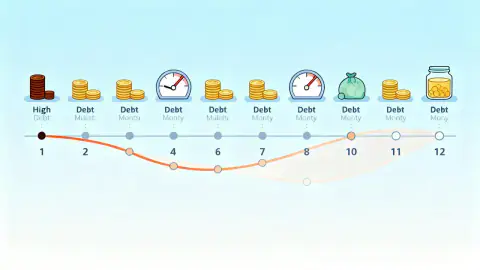
Debt repayment is a long-term project, and staying motivated can be difficult. Create a habit of tracking your progress visually. Whether it is a “debt thermometer” on your office wall or a line graph in your personal spreadsheet, seeing the downward trend of your balances provides a psychological reward that reinforces your discipline. It turns a mathematical obligation into a visible victory.
- Select a tracking tool that you find visually appealing and easy to update.
- Mark significant milestones, such as “10% Paid” or “One Loan Cleared.”
- Update your visual tracker on the same day every month.
- Celebrate these small wins to maintain your momentum for the long haul.
This habit transforms the way you perceive your debt. Instead of a stagnant burden, it becomes a dynamic goal that you are actively conquering. This positive reinforcement makes it easier to stick to your budget and resist the urge to overspend. When you can see the light at the end of the tunnel, the tunnel feels much shorter.
Mastering the Debt Management Journey
Implementing Habits That Support Responsible Debt Management is an investment in your future peace of mind. It is about taking the steering wheel of your financial life and deciding exactly where your money goes.
By combining knowledge, automation, and proactive communication, you turn debt from a source of stress into a controlled and temporary part of your journey toward wealth.
Be patient with yourself as you build these routines. The goal is consistent progress, not instant perfection. As you see your balances drop and your credit score rise, you will gain a profound sense of agency and pride in your ability to manage your resources. You have the tools, the strategy, and the habits—now, take the next step toward a debt-free future today.